| |
Dave Hershman
The Hershman Group
123 Anystreet
Suite 201
Centreville,Va 20122
[email protected]
123-456-7890
222-333-4444
http://www.OriginationPro.com
|
|
The Hershman Group is dedicated to bringing the American Dream of Home Ownership to our clients. We are the real estate experts in your local area. We have helped hundreds of local renters purchase their first homes as well as working with local investors focusing upon purchasing bank-owned properties.
Feel free to peruse our extensive listing of properties on our website www.realestate.coma. and we look forward to helping you. |
|
January 28, 2020
  The Fed, Economic Growth and Campaigns The Fed, Economic Growth and Campaigns
Don't look now, but it is coming. We constantly warn that predictions are often fruitless. But one thing is guaranteed, we will have a Presidential election this year. While we can give you the date, we obviously can't guarantee the winner. Though we can't guarantee who will say what, we can guarantee that there will be plenty of mud swung back and forth. What is interesting to us is, how the election might affect the markets and the economy. We are not asking how the winner will affect the economy. At this juncture, we are asking how the process might affect the economy.
For one thing, this election is likely to create a lot of spending, especially in swing states. From advertising to hotel rooms, there could be a boost in at least some economies. On the other hand, if there is too much mud slung around, the mood of the consumer could sour. The good news is that many consumers, who are also voters, may become numb to the entire process. Many may just ignore what is happening, except to vote. Above all, we hope everyone will vote.
It is important that we monitor the influence of the electoral process on the economy, because, as we have seen, the economy has indeed slowed down coming into 2020. The GDP for the fourth quarter is just about to be released and we are expecting that the economy grew at an approximate 2.25% rate in 2019, down close to 0.5% the year before. There will be two future revisions to this quarterly number, but the revisions are not likely to change the annual growth numbers by that much. Perhaps we could use some economic stimuli from both parties throwing some money around. Certainly, this is one reason why the Fed is likely to keep rates at today's low levels again when they meet this week as well.
 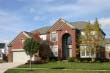 The new year is shaping up to be a good one for homebuyers—at least those interested in buying new homes. Not only are homebuilders more confident in the market than they have been in 20-plus years, but recent construction numbers are surpassing expectations. In fact, according to the U.S. Census Bureau, housing starts hit a 13-year high in December. It’s the seventh consecutive month housing starts have grown. The developments, along with strong economic growth, spurred Fannie Mae to revise its housing forecast for 2020. The company now predicts housing starts to jump 10% across 2020, with 1 million new homes hitting the market by 2021. As Doug Duncan, chief economist and senior vice president at Fannie Mae explains, “We now expect single-family housing starts and sales of new homes to increase substantially, aided by a large uptick in new construction as builders work to replenish inventories drawn down by the recent surge in new home sales activity.” In total, Fannie Mae predicts new home sales to grow 5% in 2020, with much of the growth on the tail-end of the year, and 5.5% in 2021. Existing home sales will also increase, its experts say, but at a slower pace (1.5% in 2020 and 0.2% in 2021). Source: Forbes
Millions of Americans struggle to keep up with medical bills, and as healthcare costs continue to climb, it's all too easy to fall behind. In fact, healthcare is now the number one source of personal bankruptcy filings in the U.S., with a whopping 66.5% tied to medical bills or health issues forcing unpaid time off from work. But medical debt isn't just driving up Americans' personal debt loads -- it's also making it harder for people to qualify for home loans. Zillow reports that 38% of would-be homebuyers were denied financing because of medical debt. By contrast, 28% of Americans say their applications were rejected because of their outstanding student loans, and 22% cite credit card debt as the reason they were denied. It pays to dig yourself out of that debt, save some money, and then attempt to purchase a home. The stronger a position you're in financially when you apply, the greater your chances of not only getting approved, but also securing a favorable rate on your home loan that will make your newest pile of debt more affordable. Source: Million Acres
An increasing share of second home buyers are in the market for the investment potential including many multiple owners. With vacation rental income in mind, a quarter of the 721 buyers who are currently in the market for a second home, are looking for multiple vacation homes. The first-of-its-kind survey from vacation rental company Vacasa also found that most of the buyers, across the generations, are planning to spend less than $400,000. Where the generations diverge though, is their motivation for buying with those in their mid-50s interested in a second home for personal use while younger buyers are focusing on investment; 61% of buyers in their 30s are investor buyers. More than a third (37%) of respondents want to use the positive cash flow from a vacation rental home to finance a dream while 32% want to generate income, and 19% are keen to diversify their assets. Most buyers (65%) said they do not have a definite city they want to buy in and nearly a quarter claimed they would buy a home sight unseen if they had visited the region at least once and the home met certain criteria. Source: Vacasa
|


